
Building a house is a chain of steps, each one depending on the one before. Once you understand the order, you understand why a build takes the time it takes. Here is the path, from the lot to the keys.
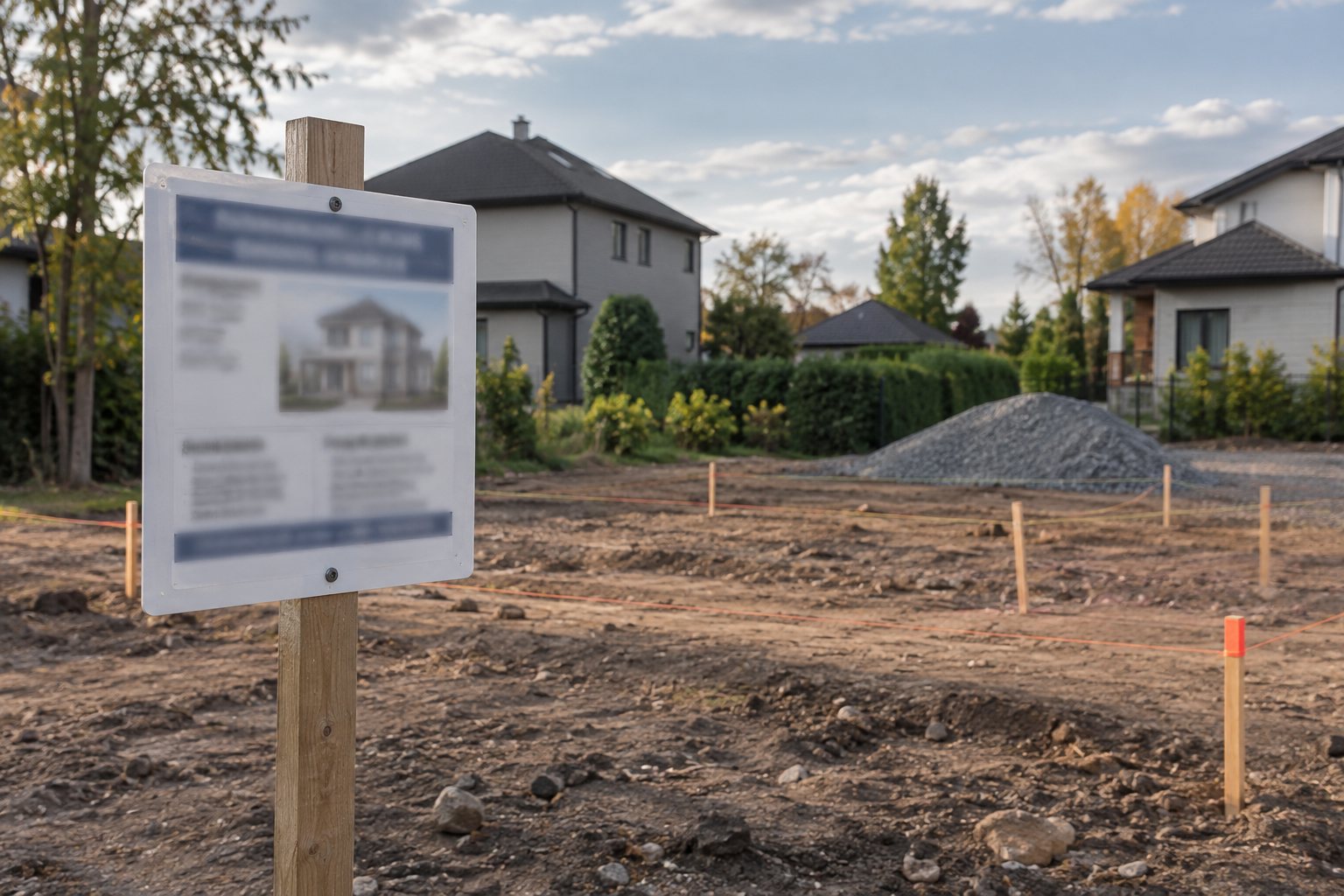
Before drawing anything, find out what the municipality allows on the lot. The zoning bylaw sets the use, the setbacks, the height, sometimes even the roof style or the cladding. A lot can be for sale and still not allow the house you have in mind. A visit to the urban planning department, or a phone call, settles the question in an hour. Check the services too: municipal water and sewer, or a well and a septic system. It changes the budget and the schedule.
The plans must be detailed enough for the municipality to issue the building permit. Depending on the size of the house, a technologist or an architect signs them. The permit usually takes two to six weeks, longer if the file comes back with questions. Nothing moves on the lot until it is posted. This is also when the budget becomes real: with plans, a contractor can quote line by line instead of estimating by the square foot.
Foundations come first, and they dictate everything else. An error of a few centimetres here is paid for on every floor. Then the framing goes up fast, often in two or three weeks, and that is when the house takes shape. Then the envelope closes it: roofing, windows, doors, air barrier, exterior cladding. Once the envelope is watertight, the weather no longer runs the site.
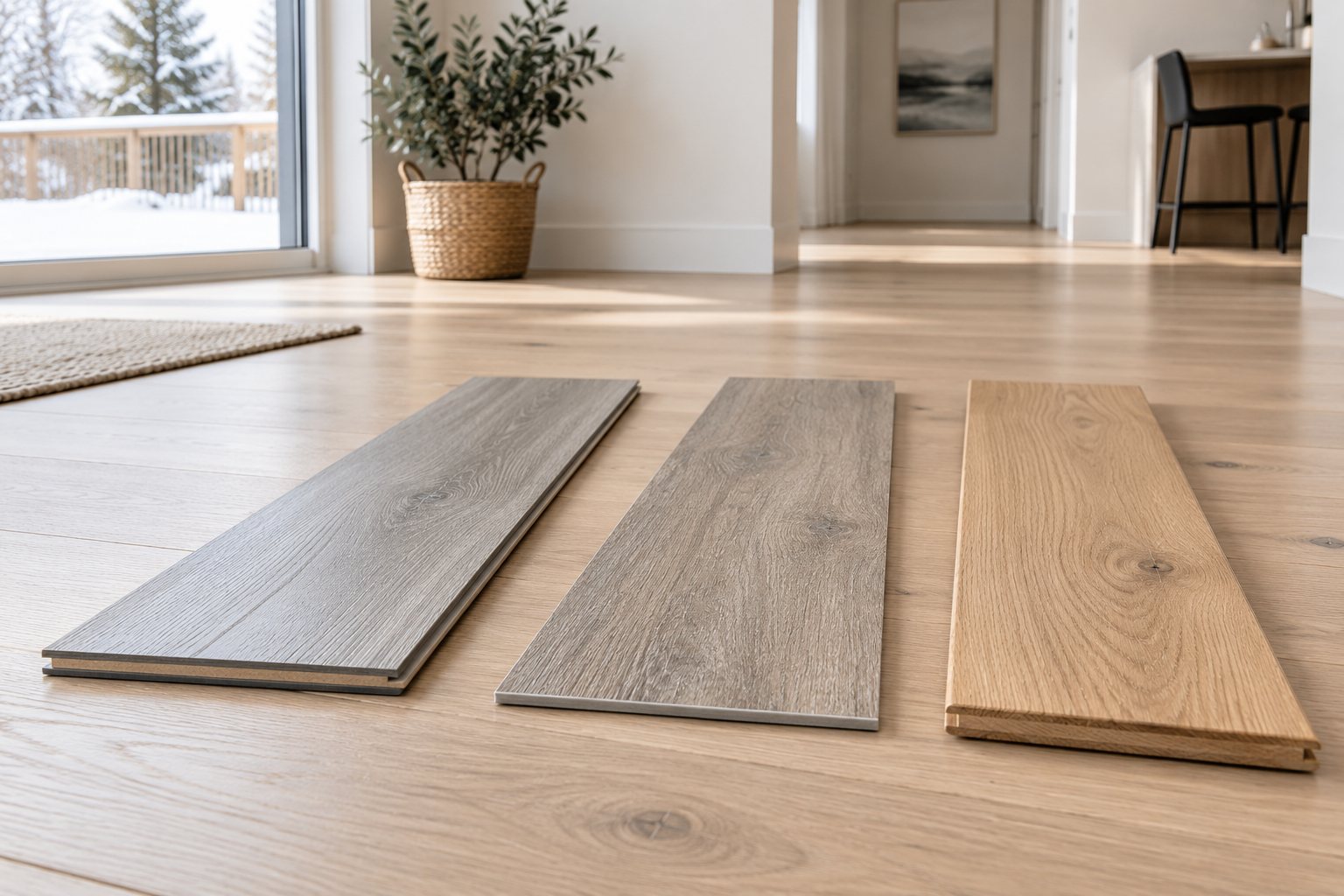
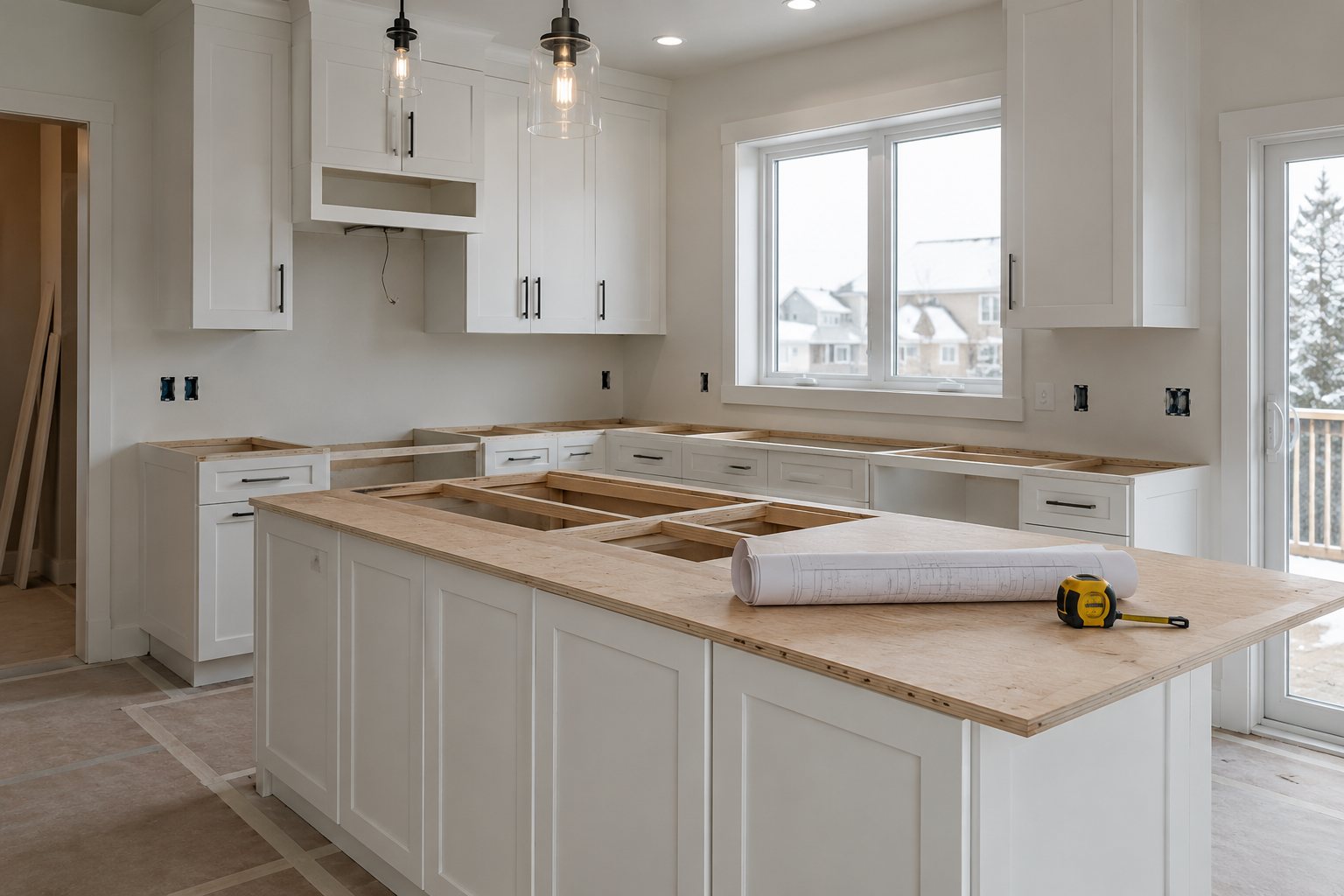
Inside, the order is not negotiable. Plumbing, electrical and ventilation go into the open walls. Inspection follows. Only then insulation, vapour barrier, drywall. Then finishing: floors, cabinets, doors, paint. Each trade waits for the previous one. An electrician who is a week late pushes back the drywall, then the floors, then the cabinets. That is why a single project lead matters so much: someone has to hold the sequence.
In Quebec, a new house built by a contractor is covered by a mandatory warranty plan, administered by the Garantie de construction résidentielle (GCR). The plan protects your deposits, covers completion of the work if the site stops, and covers defects and poor workmanship for set periods after handover. The warranty contract is signed before the work starts, and that is what triggers the protection. Read it the way you read the quote: what it covers, for how long, and from what date.
Rarely in the framing. Almost always in three places: the permit that comes back with questions, finishing choices made too late, and changes along the way. A client who picks cabinets after the drywall is up loses three to six weeks, because cabinets are ordered. The best way to keep a schedule is to decide early and change little.
Check the zoning before buying the lot. Decide the finishes before the walls close. Ask for a quote that shows every stage with its quantities. And check the RBQ licence number on the Régie's website before signing anything.
September 16, 2026

September 16, 2026